
The Miracle Fiber: Why Wool is Nature’s Ultimate Gift to the World
Welcome to our very first Bountiful Blessings Farm blog! We thought that since our sheep are our most important asset here, we would feature their “product” in our first blog. Now, if you’ve ever visited us here on the farm, you’ve probably met our hard-working, fluffy co-workers. Our sheep spend their days grazing peacefully, growing those fleecy coats that are comprised of the most technologically advanced, versatile, and sustainable materials on planet Earth: wool.
For centuries, humanity has tried to synthesize the perfect textile in laboratories. We’ve created polyesters, acrylics, and nylons. Yet, despite all our modern chemistry, science has never managed to duplicate or outperform our sheep and the sheer genius that is natural wool.
Whether you are wearing it, sleeping under it, or using it to nourish your garden, wool is an absolute marvel. Let’s take a deep-dive look into a number of exceptional, scientifically-proven properties of the wool we raise right here on the farm and look at how choosing more wool can fundamentally transform your life and our society for the better.
Amazing Wool - The Miracle Fiber
1. The Ultimate All-Weather Friend: Thermoregulation
A common misconception is that wool is only meant for cold weather and the depths of winter. While a chunky wool sweater is unmatched on a snowy day, wool is actually a four-season fiber thanks to its natural ability to regulate temperature.
How it Works
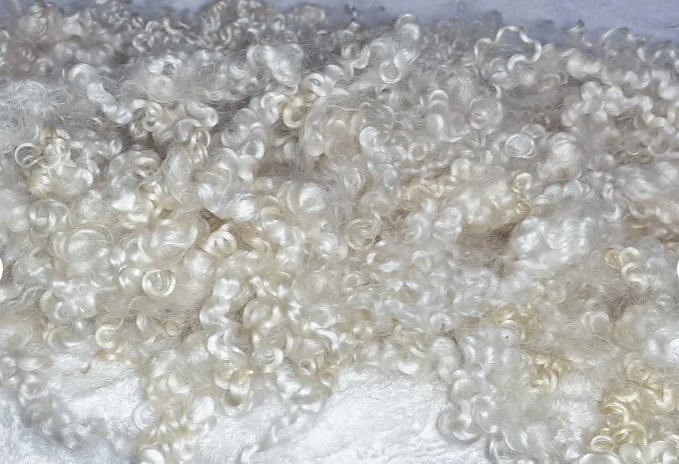
At a microscopic level, wool fibers possess a natural "crimp" or waviness. This crimp creates millions of tiny, microscopic air pockets. Air is a good insulator and a terrible conductor of heat, which means these pockets act as a highly efficient barrier.
In the Winter: It traps your body heat inside, keeping you warm.
In the Summer: It keeps the ambient outside heat from reaching your skin, keeping you cool.
Practical Example
Consider traditional desert nomads, like the Bedouins. As hard as it might be to believe, they have worn lightweight wool robes for generations to survive the blistering daytime heat and freezing desert nights. If you wear a lightweight Merino wool t-shirt on a summer hike, you will find you stay remarkably cooler and drier than you would in a synthetic polyester shirt.
2. A Personal Dehumidifier: Moisture Wicking and Management
Have you ever gone for a run in a synthetic workout shirt, only to end up feeling clammy, cold, and drenched in your own sweat? That’s because synthetics materials only push liquid away once it has already formed on your skin. Wool stops sweat before it even becomes a puddle.
How it Works
Wool is highly hygroscopic, meaning it can absorb immense amounts of moisture vapor directly from the air or your skin. Amazingly, a wool fiber can absorb up to 30% of its own weight in water without ever feeling wet or damp to the touch. It pulls the sweat vapor away from your body before it condenses into liquid, and then slowly releases it into the atmosphere.
Practical Example
This makes wool the absolute gold standard for bedding. Wool duvets and mattress toppers regulate the micro-climate of your bed. If your spouse sleeps hot while you sleep cold, or vice versa, a wool duvet can accommodate both of you, managing moisture and temperature so you both wake up dry and comfortable.
3. Say Goodbye to the Funk: Odor Regulation and Resistance
This era of "fast fashion" is dominated by synthetic gym clothes that smell terrible after just one workout. Wool, on the other hand, is nature's original deodorizer.
How it Works
Odor doesn't actually come from your sweat; it comes from the bacteria that feast on your sweat. Synthetic fibers are a breeding ground for these bacteria because they trap lipids and oils. Wool fibers contain a natural protein structure that is highly inhospitable to bacteria. Furthermore, because wool manages moisture so effectively, it denies bacteria the damp environment they need to thrive in the first place.
Practical Example
If you pack a wool sweater or a pair of wool socks for a week-long camping or travel trip, you can wear them multiple days in a row without a hint of odor. Just hang them up to air out overnight, and they are as fresh as morning dew the next day. It cuts down on laundry drastically, which saves time, water, and energy.
4. Built to Last: Superior Durability and Elasticity
In our world full of disposable goods, wool stands alone as a testament to longevity. It is a fiber designed to be flexed, stretched, and put to hard work.
How it Works
Because of its helical (spring-like) molecular structure, wool is incredibly elastic. A single cotton fiber can be bent back on itself about 3,200 times before it breaks. A silk fiber can bend 1,800 times. A wool fiber can be bent back on itself more than 20,000 times without breaking! It can be stretched up to 50% of its original length when wet, and 30% when dry, and it will snap right back into its original shape.
Practical Example
This is why heirloom wool blankets can be passed down through three or four generations without losing their shape or falling apart. It’s why high-end wool carpets look pristine decades after nylon carpets have worn thin and matted down in high-traffic hallways.
5. Nature’s Fire Retardant: Built-in Fire Resistance
Safety is paramount in our homes, and wool offers a level of natural fire protection that synthetic fibers can only achieve through heavy treatment with toxic chemical flame retardants.
How it Works
Wool has a high natural ignition temperature (around 570–600°C), a high limiting oxygen index, and low heat of combustion. In plain English: it is incredibly difficult to ignite. If it does catch fire, it doesn't melt, drip, or stick to the skin like polyester or nylon do. Instead, it chars, self-extinguishes, and stops the fire from spreading.
Practical Example
Because of these life-saving properties, wool is the strictly mandated material for military uniforms, firefighter dress uniforms, clothing for welders and other working with fire or sparks, and the interior carpeting of commercial aircraft. Wrapping your baby in a natural wool sleep sack provides peace of mind that no synthetic material can match.
6. The Ultimate Comfort: Natural and Hypoallergenic
There is an old myth that wool is universally itchy. While coarse wool from certain breeds is best kept for rugged outerwear or carpets, the high-quality wool raised with care on modern farms, like Bountiful Blessings Farm, is incredibly soft, soothing, and gentle on the skin.
How it Works
Superfine wool fibers bend easily when they press against the skin, eliminating the "pricking" sensation caused by coarser fibers. Furthermore, pure wool is naturally hypoallergenic. It acts as a natural air filter, trapping dust and allergens within its fibers until it is cleaned, preventing them from floating around your living space.
Practical Example
Medical studies have shown that premature infants sleeping on wool sheepskins rest more calmly and grow faster. Patients in hospital beds for extended periods, benefit from resting on pure wool mats which prevent bed sores from forming. For adults suffering from eczema or sensitive skin, superfine wool garments have been shown to drastically reduce skin irritation compared to synthetic alternatives.
7. Closing the Loop: Sustainability and Renewability
When you choose wool, you are participating in a beautiful, natural cycle. It is a choice that honors the earth rather than depleting it.
How it Works
Renewable: As long as there is grass for sheep to eat and clean water to drink, sheep will produce a fresh fleece every single year. It is a completely renewable resource harvested without harming the animal. (And shearing removes excess weight from the sheep, as well as a potential home for insects and vegetable matter)
Biodegradable: If a synthetic fleece jacket ends up in a landfill, it will sit there for hundreds of years, breaking down into toxic microplastics. If a pure wool garment is buried in the soil, it will naturally biodegrade in a matter of months, releasing valuable nutrients back into the earth. (Think about that: As tough and resilient as wool is, once in the earth it returns from whence it came in just a short amount of time)
8. From the Pasture to the Garden: A Great Soil Modifier
The magic of wool doesn't end when a garment or blanket reaches the end of its useful life. In fact, it can go right back into the earth to grow the food we eat.
How it Works
Wool is packed with nitrogen, potassium, sulfur, and carbon—the exact nutrients that plants crave. Raw, unwashed wool (or shredded old wool textiles) can be used as a heavy-duty mulch or mixed directly into garden soil. Pelletized wool, a new product, makes it easy to add wool and it its nutrients back into the soil.
Practical Example
As a mulch, wool suppresses weeds, insulates plant roots from extreme temperatures, and acts as a natural slug deterrent (snails and slugs hate crawling over the textured fibers). Even better, wool retains water beautifully. Adding wool pellets or raw fleece to your potted plants or garden beds reduces the amount of watering you need to do by up to 25%, holding onto moisture and releasing it slowly to the roots.
The Big Picture: Why Society Needs (More) Wool
When we look at the challenges facing modern society—micro-plastic pollution in our oceans, the mountain of textile waste in landfills—wool presents itself not just as a luxury choice, but as a vital solution.
Every time we wash a synthetic garment, thousands of microscopic plastic fibers wash down our drains and into our waterways, eventually ending up in our food chain. Wool, being a natural protein, breaks down harmlessly. By shifting our consumer habits toward wool, we reduce our dependency on crude oil (the base ingredient for polyester) and support local agriculture and farming families who act as stewards of the land.
Furthermore, wool teaches us to value quality over quantity. A society that embraces wool is a society that steps away from the frantic, wasteful cycles of fast fashion and moves toward a slower, more intentional, and deeply sustainable way of living.
Final Thoughts from Bountiful Blessings Farm
Here at Bountiful Blessings Farm, we see the miracle of wool every single day. Watching our sheep grow their magnificent fleeces, shearing them with care, and seeing that raw fiber transform into beautiful, functional products is a profound reminder of how perfectly nature provides for us.
By choosing wool, you aren’t just buying a product; you are investing in your health, your comfort, and helping our environment.
Next time you are looking for a cozy blanket, a dependable pair of socks, or a way to boost your backyard garden, look no further than the humble, magnificent sheep. Nature already invented the perfect fiber—we’re just proud to help bring it to your doorstep.
For more information on just how amazing wool is, and read some really nerdy stuff, check out this link: https://pmc.ncbi.nlm.nih.gov/articles/PMC12523852/